
Root Canal Treatment Coventry
Root canal treatment saves teeth that would otherwise need to be removed. If you have been told you need one, or you are in pain, we can help. It is far more comfortable than most people expect.
"Fantastic job on my root canal and broken filling. Great care throughout and now completely pain free. Highly recommend."

"Fantastic job on my root canal and broken filling. Great care throughout and now completely pain free. Highly recommend."
What is root canal treatment?
Root canal treatment has an unfair reputation. The procedure itself is no more uncomfortable than having a filling. What people remember is the toothache beforehand, not the treatment. We remove the infected pulp, clean the canals, and seal the tooth so you keep it for years to come.

Inside every tooth is a soft tissue called the pulp, which contains nerves and blood vessels. When decay or damage allows bacteria to reach the pulp, it becomes infected. Left untreated, the infection spreads to the surrounding bone and the tooth eventually needs to come out.
Root canal treatment stops the infection in its tracks and gives the tooth a second chance. Most treated teeth last just as long as healthy ones.
We remove the infected pulp, carefully clean and shape the canals inside the root, then fill and seal them. The tooth is then usually restored with a crown to protect it. You will be numb throughout, and most patients are pleasantly surprised by how manageable the whole thing is.
When might you need root canal treatment?
Root canal treatment is needed when the soft tissue inside the tooth becomes infected. The sooner it is treated, the better the chance of saving the tooth.
 01
01
Persistent toothache
A deep, throbbing ache that does not go away — especially one that wakes you at night — is one of the clearest signs the pulp inside the tooth is infected and needs treating.
 02
02
Dental abscess
A pocket of infection at the root of the tooth, often causing significant pain, swelling, and sometimes a visible gum boil. Root canal treatment drains the infection and saves the tooth.
 03
03
Deep decay reaching the pulp
When decay has been left long enough to break through the outer layers of the tooth and reach the nerve, a filling is no longer enough. The pulp needs to be removed and the canal sealed.
 04
04
Cracked or fractured tooth
A crack that runs deep enough to expose the pulp allows bacteria in. If the tooth is sensitive to biting or temperature and does not settle, the pulp may already be compromised.
 05
05
Swollen or tender gums
Swelling, tenderness, or darkening of the gum around a specific tooth can indicate infection spreading from the root. This needs attention before it affects the surrounding bone.
 06
06
Tooth darkening
A tooth that has gradually turned grey or dark is often a sign the pulp has died inside it. Root canal treatment can still save the tooth, which can then be whitened or crowned.
What to expect step by step


X-ray and examination
We examine the tooth carefully and take an X-ray to see the full length of the root canals and assess how far the infection has spread. This tells us exactly what we are dealing with and lets us plan the treatment properly before we start.
~15 minutesLocal anaesthetic
We numb the tooth and surrounding area thoroughly before we do anything else. You will feel a small pinch from the injection, then nothing. We give the anaesthetic plenty of time to take full effect and will not begin until you are completely comfortable.
~5 minutesRemoving the pulp and cleaning the canals
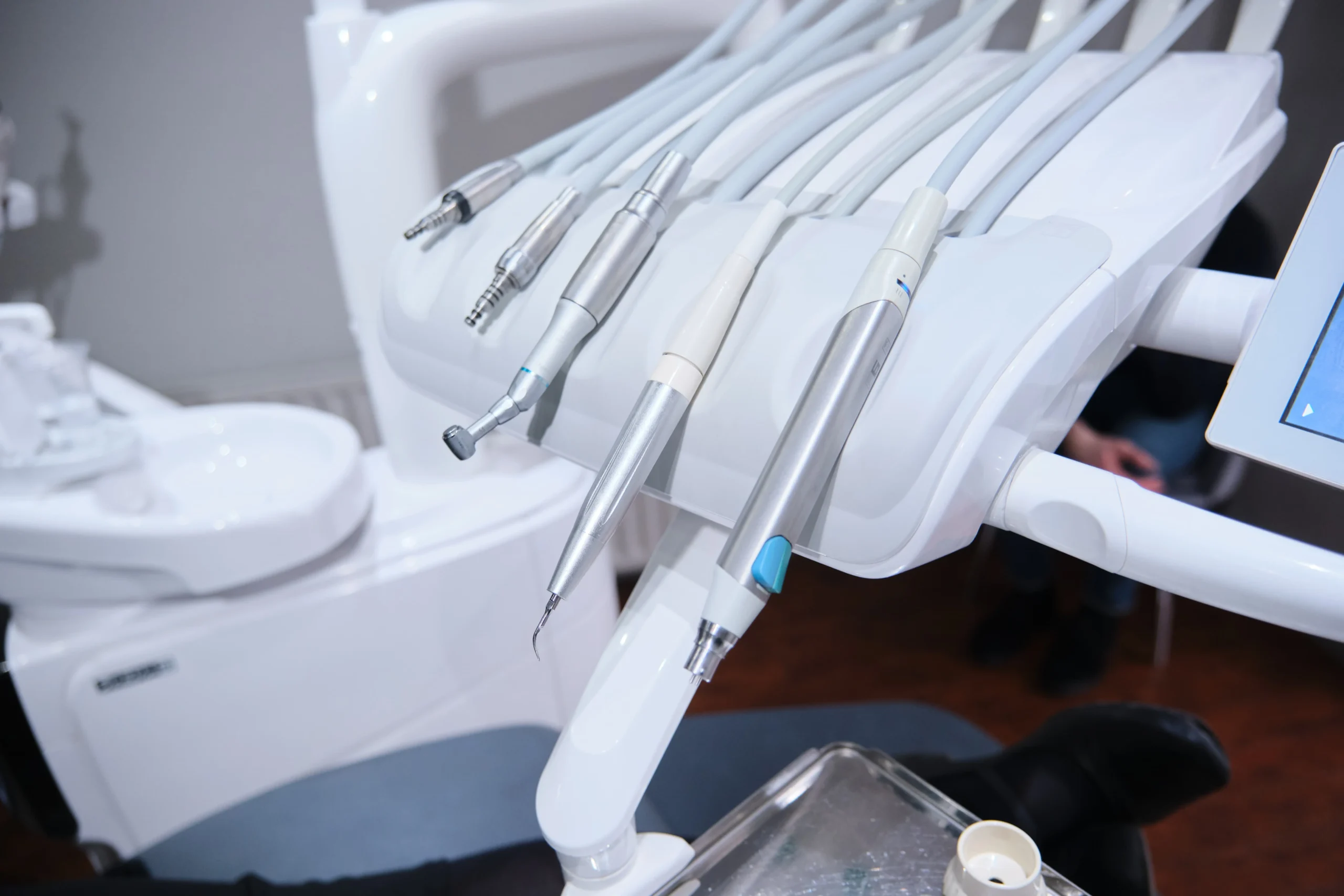
We create a small opening in the top of the tooth to access the pulp chamber. The infected pulp is removed and each canal is carefully cleaned, shaped and disinfected. You will feel pressure as we work, but no pain. This is the longest part of the procedure.
~40 minutesFilling and sealing the tooth
Once the canals are clean and dry, we fill them with a rubber-like material called gutta-percha and seal the tooth. A temporary or permanent filling is placed on top. In most cases a crown is then recommended to protect the tooth long term, which is fitted at a separate appointment.
~20 minutesAftercare and recovery
Some tenderness around the tooth for a day or two afterwards is completely normal, and over-the-counter painkillers manage this well. We will give you clear aftercare advice before you leave. Most people return to normal the following day, relieved that the tooth is finally out of pain.
~10 minutesRoot canal FAQs
Honest answers to the questions we hear most often. Still not sure? Give us a call on 024 7650 1125 and we will talk it through.
Book appointment
This is the question we hear most, and the honest answer is no. The tooth is fully numbed before we start, so you will not feel pain during the procedure. What most people remember is the toothache before they came in, not the treatment itself. Root canal treatment does not cause pain; it ends it.
Most root canal treatments take between 60 and 90 minutes. More complex cases, or teeth with several canals, can take longer and may need a second appointment to complete. We will give you a realistic idea of what to expect once we have examined the tooth and seen the X-ray.
In most cases, yes. Once the pulp is removed, the tooth becomes more brittle and is at greater risk of fracturing under biting pressure. A crown protects it and significantly extends its life. We will discuss whether a crown is right for your specific tooth and talk through the options with you.
With proper care, a root-treated tooth can last just as long as a natural one. The key factors are having a well-fitted crown placed afterwards and maintaining good oral hygiene. We check the tooth at every routine appointment to make sure everything is holding up as it should.
Keeping your natural tooth is almost always the better option. Removing it creates a gap that can cause neighbouring teeth to shift, affects your bite, and may eventually require an implant or bridge to replace. Root canal treatment preserves the tooth and avoids all of that. We will always give you an honest recommendation based on your specific situation.
A dental infection does not clear up on its own. Left untreated, it spreads to the surrounding bone, can cause a painful abscess, and ultimately results in losing the tooth altogether. In rare cases, serious infections can spread further. The sooner it is treated, the simpler and less costly the solution.

Stop putting it off.
The longer an infection is left, the harder it becomes to save the tooth. Book in and we will get you seen quickly, sort the pain out, and give you a clear plan going forwards.